Guides
Lumbar spinal stenosis narrows the spaces around your spinal nerves
Lumbar spinal stenosis is a narrowing in the lower spine that can press on nerves and cause buttock or leg pain [1]. It usually develops slowly from wear in the discs and joints, and treatment often starts without surgery [2].
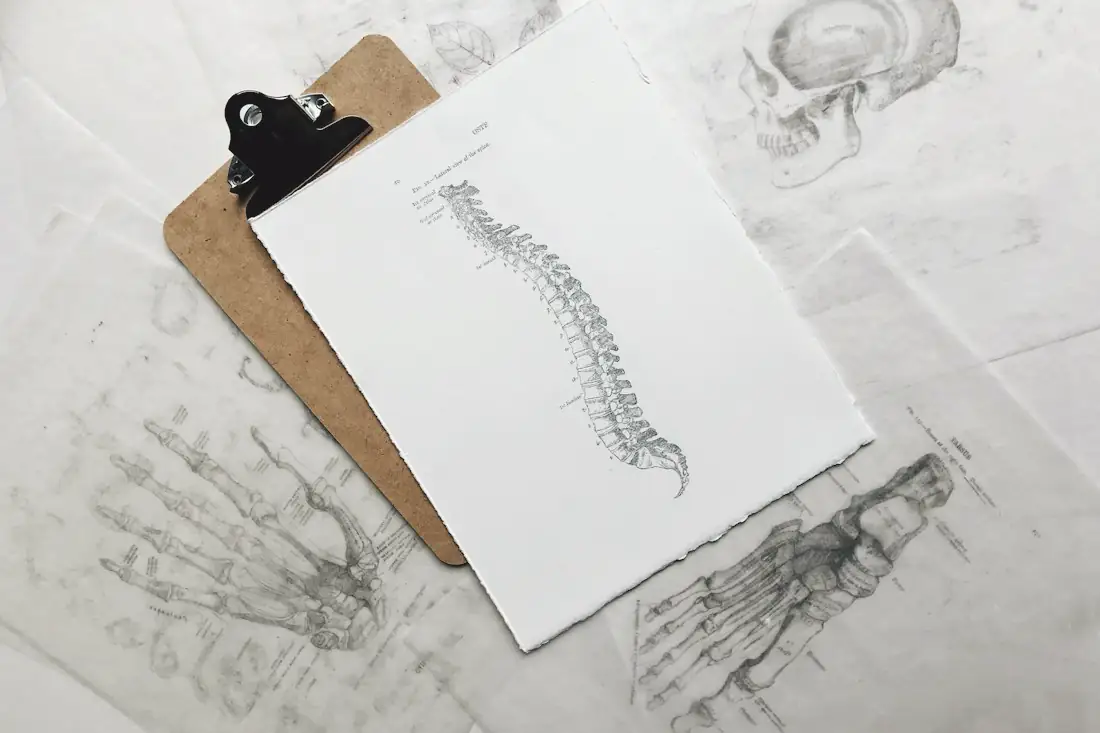
Lumbar spinal stenosis shrinks the canal or the openings that hold your nerves
Lumbar spinal stenosis means the spinal canal, the nerve root canals, or the openings where nerves exit have become smaller [1]. That can lead to buttock or leg pain, with or without back pain [1]. It can occur at three sites: the central canal, the lateral recess, and the neuroforamen [2].
It is common in older adults. One review estimated that about 11% of the general population has symptoms, and the rate was higher in clinical settings [1]. In the Framingham Study, 47.2% of people aged 60 to 69 had the absolute form, and the share rose with age [2].
Disc wear often starts the chain that crowds the spinal canal
The most common type is acquired through degeneration, meaning normal wear over time [1]. The narrowing happens slowly [2]. The usual sequence looks like this:
- Degenerative disc disease often comes first, and the space between the bones of the spine gets narrower [2].
- The narrower disc space increases motion in the facet joints, which are the small joints at the back of the spine, and those joints wear down [2].
- Stress on the ligamentum flavum, a ligament at the back of the canal, makes it fold inward [2].
- Disc degeneration may also lead to disc protrusions, where disc material bulges out [2].
- Together, these changes crowd the canal from the front, sides, and back, and may press on the spinal nerve roots [2].
Bone, ligament, and disc tissue can all thicken or degenerate, and that squeezes the nerve tissue. The pressure can irritate nerves mechanically or chemically [1].
Neurogenic claudication causes leg symptoms that ease when you lean forward
Neurogenic claudication is nerve-related leg discomfort with walking. It is the most common symptom of stenosis [1]. Signs that point toward stenosis include:
- Pain or discomfort that spreads to the buttocks, thigh, or lower leg while you walk [2].
- Symptoms that fade when you sit or lean forward, called the shopping cart sign [2].
- Relief when using a shopping cart or riding a bicycle [1].
- With more pronounced stenosis, leg weakness, muscle cramping, numbness, and imbalance [2].
- Pain that follows one nerve's path down the leg, when the side pocket or nerve opening is mostly affected [2].
Not everyone with a narrowed canal has these symptoms [1]. That is why imaging alone is not enough.
MRI or a CT myelogram confirms stenosis when paired with your history and exam
A physical exam and x-rays are not sensitive or specific enough to diagnose stenosis. An MRI or a CT myelogram is needed, and MRI is the most common choice [2].
There is no universal gold standard test. Doctors rely on expert judgment that matches the imaging to a detailed history and physical exam [1].
Lumbar spinal stenosis that lasts past 12 weeks of nonsurgical care needs a doctor's review
If your symptoms have not improved after about 12 weeks of nonsurgical treatment, call your doctor. Nonsurgical treatment may be less effective in people whose symptoms have not resolved within 12 weeks [2].
Guidelines recommend surgery when nonsurgical treatments have given insufficient benefit [3]. When conservative treatment fails, surgery is more effective than continuing it [2]. Deciding whether to keep managing the problem or refer to a spine surgeon is a recognized dilemma for clinicians, partly because few randomized trials exist [3].
Call your doctor too if long-term opioid use is part of your plan. Few to no data show that opioids help lumbar spinal stenosis, and long-term prescribing should be minimized [2].
Treatment options for stenosis range from medication and injections to surgery
| Option | What to know |
|---|---|
| Medication | NSAIDs are cheaper and less addictive than opioids, but long-term use can cause stomach bleeds, liver failure, and kidney problems [2]. Muscle relaxants can raise the risk of falls [2]. |
| Physical therapy | Common, but little evidence shows long-term benefit. Patients often need four to six weeks, two to three times a week [2]. |
| Epidural steroid injections | These give short-term relief of back and leg pain. Less evidence supports long-term benefit [2]. |
| Laminectomy | Surgery that is more effective than continuing failed conservative care [2]. Adding fusion raises cost and complications [2]. |
| Interspinous spacer | A less invasive procedure placed through the skin for people who fail conservative care. Outcomes were comparable to laminectomy in one review [2]. |
Surgery is not risk free. It carries costs and risks of complications, including repeat operations [2]. Minimally invasive options are still evolving, and careful patient selection matters for safety and results [1].
Sources
- Best Practices for Minimally Invasive Lumbar Spinal Stenosis Treatment 2.0 (MIST): Consensus Guidance from the American Society of Pain and Neuroscience (ASPN), Journal of pain research
- Cost-effectiveness and Safety of Interspinous Process Decompression (Superion), Pain medicine (Malden, Mass.)
- Clinical assessment and management of lumbar spinal stenosis: clinical dilemmas and considerations for surgical referral, The Lancet. Rheumatology