Guides
Knee osteoarthritis causes pain that differs from meniscus and ligament injuries
Knee osteoarthritis, patellofemoral pain and meniscal tears are among the most common causes of knee pain, and first-line care for each is exercise, education and self-management [1]. Which problem you have depends largely on your age, how the pain began and what movements set it off [1].
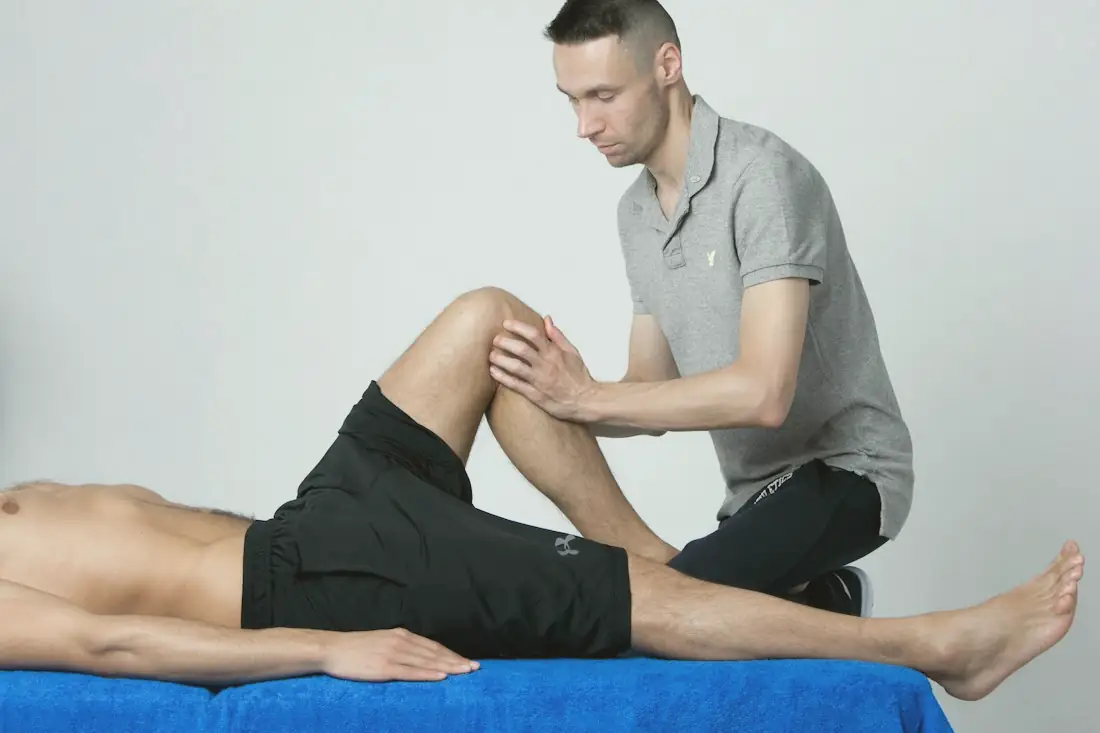
Clinical examination separates knee osteoarthritis from patellofemoral pain and meniscal tears
About 5% of all adult primary care visits are related to knee pain [1]. Three conditions are among the most common causes: osteoarthritis (OA, the wear-related joint condition), patellofemoral pain (pain around the front of the knee) and meniscal tears (tears in the knee's cartilage cushion) [1].
| Condition | Typical pattern | First-line care |
|---|---|---|
| Knee OA | Age 45 or older, pain with activity, under 30 minutes of morning stiffness [1] | Exercise, weight loss if overweight, education [1] |
| Patellofemoral pain | Usually under 40 and physically active, front knee pain during a squat [1] | Hip and knee strengthening plus foot orthoses or patellar taping [1] |
| Meniscal tear | Twisting injury under 40, or a degenerative tear with OA at 40 or older [1] | Exercise therapy for 4 to 6 weeks for most tears [1] |
For meniscal tears, a clinician may use the McMurray test, which rotates and extends the knee, and may check for tenderness along the joint line [1]. Diagnosis of OA is clinical, and imaging is widely overused [3].
Knee osteoarthritis care starts with exercise and education
Osteoarthritis is a leading cause of disability in older adults [3]. Treatment should be fitted to you and built around core measures [3].
- Self-management programs and education help you handle the condition yourself [3][1].
- Exercise therapy is part of first-line care [3][1].
- Weight loss is advised if you are overweight [3][1].
- Surgery is kept for people who have not responded to less invasive methods [3].
Knee joint replacement can be considered for end-stage OA after all appropriate conservative options have been used [1]. End-stage means little or no joint space and an inability to cope with the pain [1].
A severe meniscal tear or stalled knee pain calls for your doctor
A doctor's involvement changes the plan in a few specific situations [1][4].
- Call your doctor if a tear is severe and traumatic, such as a bucket-handle tear where torn tissue has shifted out of place, because surgery is likely required [1].
- Call your doctor if front knee pain has not improved with conservative care, because plain X-rays are recommended at that point [4].
- Call your doctor if you have end-stage OA and cannot cope with the pain, because joint replacement referral can be considered once conservative options are used [1].
Patellofemoral pain syndrome care includes rest and physical therapy
The hallmark is pain in or around the front of the knee that gets worse when the knee is bent during weight-bearing activity [4]. It often worsens with long sitting or going down stairs, and pain with squatting is the most sensitive exam finding [4].
- Treatment includes rest and a short course of anti-inflammatory medicine [4].
- Physical therapy aims to strengthen the hip flexor, trunk and knee muscles [4].
- Patellar taping may give added short-term relief, but evidence is not strong enough to support routine use [4].
- Surgery is a last resort [4].
A clinician may look at your gait, posture and footwear for contributing causes [4]. X-rays are not needed to diagnose this condition, but they can rule out OA, a kneecap fracture and other problems [4].
Osgood-Schlatter disease causes growth-related knee pain in adolescents
Up to 10% of adolescents are affected by this sport- and growth-related knee problem, which causes local pain around the tibial tuberosity, a spot on the shinbone [5]. Treatment is mostly conservative [5].
Stretching appears to help, but no randomized trial compares specific exercises with sham or usual care [5]. Study quality so far is poor to moderate, so firm conclusions about the best approach are not yet possible [5].
ACL and meniscal injuries often leave lasting symptoms even after treatment
ACL (a main stabilizing ligament in the knee) and meniscal tears are the most common traumatic knee injuries in athletes [2]. Two-thirds of people do not return to their pre-injury level of sport within a year of ACL reconstruction [2]. Half of injured people develop symptomatic OA within 10 years, whether or not they have surgery [2].
Active rehabilitation, meaning exercise therapy, is emphasized by clinical guidelines to restore strength and reduce pain [2]. The evidence behind specific rehab methods is mostly low quality [2]. The better-supported findings after ACL injury are these:
- Neuromuscular electrical stimulation improves thigh (quadriceps) strength [2].
- Structured home-based rehabilitation worked about as well as structured in-person rehabilitation for strength and self-reported function [2].
- Knee bracing after surgery was ineffective for physical function and looseness of the joint [2].
No evidence was found to guide rehabilitation of isolated traumatic meniscal injuries in young adults [2].
Transcutaneous electrical nerve stimulation may lower pain for a short time
This treatment, called TENS, sends electrical pulses through the skin at or near the site of pain, at a strong but comfortable level [6]. A large review of trials found pain was lower during or right after strong but comfortable TENS than with a placebo device, with moderate-certainty evidence [6]. It was also lower than with standard care treatments, though that evidence was low certainty [6].
Side effects were poorly reported, generally mild and no different from comparison treatments, and no serious ones were found [6]. Many of the trials were small, so the size of the benefit is uncertain [6].
Sources
- Evaluation and Treatment of Knee Pain: A Review, JAMA
- Rehabilitation after anterior cruciate ligament and meniscal injuries: a best-evidence synthesis of systematic reviews for the OPTIKNEE consensus, British journal of sports medicine
- Osteoarthritis, Lancet (London, England)
- Patellofemoral Pain Syndrome, American family physician
- A systematic review on conservative treatment options for OSGOOD-Schlatter disease, Physical therapy in sport : official journal of the Association of Chartered Physiotherapists in Sports Medicine
- Efficacy and safety of transcutaneous electrical nerve stimulation (TENS) for acute and chronic pain in adults: a systematic review and meta-analysis of 381 studies (the meta-TENS study), BMJ open