Guides
Mild long head biceps tendinopathy calls for nonsurgical care first
Biceps tendonitis sits on a range of tendon problems, from inflammation to gradual wear [1]. Mild cases are treated without surgery first [1].
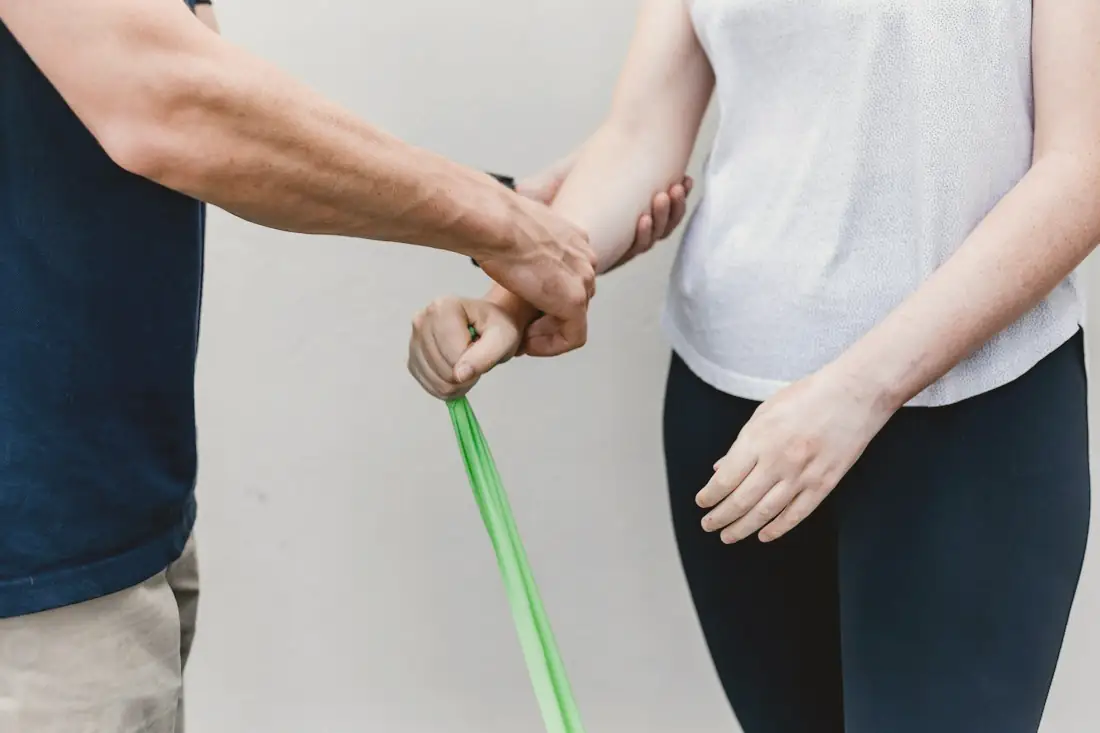
The long head of the biceps tendon can suffer inflammation or wear
Tendinopathy of the long head of the biceps covers a spectrum. At one end is inflammatory tendinitis, where the tendon is irritated. At the other is degenerative tendinosis, where the tendon breaks down over time [1].
Biceps tendon problems often occur alongside other shoulder problems [1]. That matters because shoulder pain from this tendon can be debilitating [3]. Chronic tendinopathy of this tendon is common and can be difficult to treat [3].
Overhead sports expose the shoulder to repeated high-speed loading
No source here names one single cause of biceps tendonitis. What the evidence does show is that these disorders often occur together with other shoulder problems [1].
Shoulder injuries are frequent in swimming, volleyball and handball, where the arm moves over the head again and again, at high speed or in extreme positions [4]. Injuries can come from one sudden transfer of energy, from small loads adding up over time, or from both [4].
A large review of rotator cuff related shoulder pain counted long-head biceps tendinopathy among the conditions it covers. It describes the causes of that group as multifactorial, meaning several factors act together [5]. The factors it lists are:
A doctor confirms biceps tendon problems with a thorough history and exam and imaging
Diagnosis needs a thorough history, a physical examination and radiographic evaluation, which means imaging [1].
Exam tests have limits. A review of shoulder physical exam tests concluded that no single test can be unequivocally recommended to make a definite diagnosis [2]. Combining tests improves accuracy, but only marginally [2]. That review supports a full clinical examination that includes your history [2].
Some tests for the biceps area look promising. One sports medicine statement rated the Biceps Load II, three-pack and Yergason tests as highly accurate, with low to moderate quality of evidence [4]. Another review warns that the Biceps Load II test was first reported with great numbers, and later research failed to replicate them [2]. The same review found Yergason's test had the best specificity (95%) for tears at the top of the shoulder socket [2].
Nonsurgical care comes first for mild biceps tendon disease
For mild disease, nonsurgical management is attempted first [1]. The table shows what each approach rests on.
| Approach | What the evidence says |
|---|---|
| Rest, anti-inflammatory drugs, physical therapy, injections | Tried first in mild disease [1] |
| Exercise | Widely recommended as first-line nonsurgical care for rotator cuff related shoulder pain [5] |
| Shock wave, ultrasound, low-level laser, iontophoresis | Used in studies of the biceps tendon, but evidence is thin [3] |
| Manual therapy, dry needling, patient education | Described in reviews and commentaries as additions [3] |
| Surgery | Indicated for refractory or severe disease [1] |
A scoping review of physical therapy for this tendon found most studies tested treatment machines and similar methods. It concluded there is a dearth of evidence on conservative management, meaning care without surgery [3]. Little consensus exists on the best approach [3].
Concentric strengthening ranked best in a review of rotator cuff related shoulder pain
In a network review of exercise trials, concentric strengthening performed best for both shoulder pain and shoulder dysfunction [5]. Concentric work means the muscle shortens while moving a load [5]. The review included people with long-head biceps tendinopathy among several diagnoses, so the results are not specific to the biceps tendon [5].
If concentric strengthening is not suitable, the same review says eccentric training and motor control exercise can be alternatives [5]. Eccentric work means the muscle lengthens in a controlled way under load [5]. Even so, no consensus exists on the single best exercise program [5].
Refractory or severe biceps tendon disease calls for a doctor's review of surgery
Nonsurgical care is tried first in mild disease, and surgery is indicated when disease is refractory or severe [1].
- Call your doctor if shoulder pain has not settled with rest, medicine, physical therapy or injections. Surgery is indicated for refractory disease, which means disease that does not respond to treatment [1].
- Call your doctor if the disease is considered severe. Surgical management is also indicated for severe disease [1].
- Call your doctor if biceps pain comes with other shoulder trouble. Biceps tendon disorders often occur with other shoulder problems, and diagnosis needs a full history, exam and imaging [1].
Surgical options described include simple biceps tenotomy and a variety of tenodesis techniques. Open tenodesis has been used historically, and promising results have recently been reported with the arthroscopic approach [1].
Sources
- Long head of the biceps tendinopathy: diagnosis and management, The Journal of the American Academy of Orthopaedic Surgeons
- Which physical examination tests provide clinicians with the most value when examining the shoulder? Update of a systematic review with meta-analysis of individual tests, British journal of sports medicine
- Physical therapy interventions used to treat individuals with biceps tendinopathy: a scoping review, Brazilian journal of physical therapy
- Diagnosis, prevention and treatment of common shoulder injuries in sport: grading the evidence - a statement paper commissioned by the Danish Society of Sports Physical Therapy (DSSF), British journal of sports medicine
- Effects of seven types of exercise in the treatment of rotator cuff-related shoulder pain (RCRSP): a systematic review and Bayesian network meta-analysis, Journal of orthopaedic surgery and research
- High-intensity versus low-level laser in musculoskeletal disorders, Lasers in medical science