Guides
Sever's disease causes heel pain in growing and active children
Sever's disease is the most common cause of heel pain in children and teens, and no long-term effects have been linked to it [1][2]. Treatment is usually conservative, meaning rest, stretching and heel support rather than surgery [3][4].
Sever's disease irritates the growth area at the back of the heel
Sever's disease, also called calcaneal apophysitis, is inflammation at the growth area of the heel bone [3]. The heel bone is called the calcaneus. In a growing child, this area is still soft and open [1].
The calf muscle pulls on it through the Achilles tendon, the thick cord at the back of the ankle. Repeated pulling is a major cause of the pain [5]. It is usually an overuse problem and is not usually tied to a single injury [3].
It mostly affects boys between 8 and 15 and girls between 7 and 12, with a peak between 10 and 12 [5][3]. Full recovery is expected once the growth area closes [3]. No long-term effects have been associated with it [1].
Sever's disease causes heel pain that a squeeze test can reproduce
- Pain at the back or bottom of the heel, or where the Achilles tendon attaches [6].
- Aching, burning or sharp pain at the Achilles tendon attachment [5].
- Pain and tenderness on the sides of the heel when a clinician squeezes it, known as the squeeze test [5].
- Pain when the child rises up on the toes of one foot [5].
Diagnosis is mainly based on the child's history and a physical exam [3][6]. A positive heel squeeze test is usually enough to point to Sever's disease [3]. X-rays are usually not necessary, though they can help rule out other problems [4].
Pain can occur on both sides, although it is often on one side only [3][6].
Heel pain that does not fit Sever's disease needs a doctor's exam
Other conditions can cause heel pain in children. These include Achilles tendon problems, a stress fracture of the heel bone, infection in the bone, bone tumors, and a joint disease called juvenile idiopathic arthritis [5]. Imaging such as X-ray, CT or MRI can help rule these out [5].
One situation points toward calling your doctor, because other causes may need to be ruled out [3][5]:
Tight calf muscles and some sports raise the risk of Sever's disease
Limited ankle bend is the most common body-related factor studied [3][6]. Muscle grows more slowly than bone during a growth spurt, which creates tension at the heel [6]. Flat feet, high arches and tight Achilles tendons are also listed as risk factors [5].
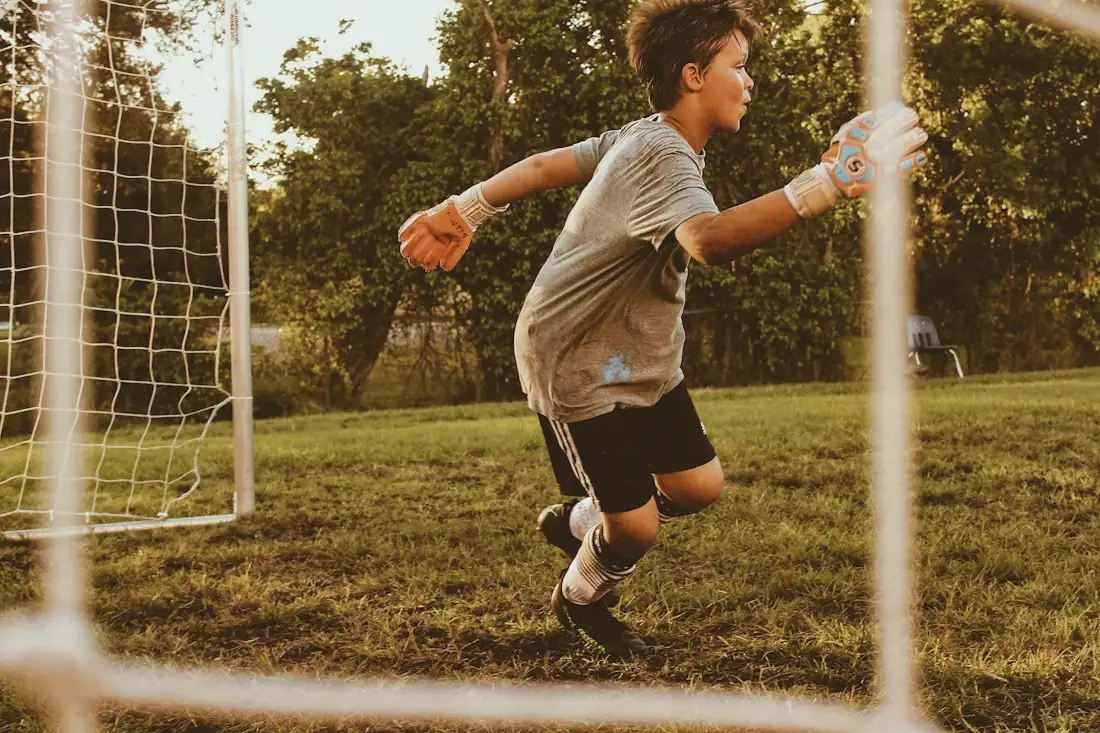
Activity matters too. High-impact sports such as soccer, track, gymnastics, tennis and ballet are linked to the injury [1]. Starting a new sport may be associated with it [3]. Running on hard surfaces and footwear without cushioning may make it worse [6].
Some findings are mixed. Studies disagree on whether body weight is a risk factor, and they disagree on whether activity level changes the risk [3][6].
Stretching and heel support are the usual treatments for Sever's disease
| Treatment | What was reported |
|---|---|
| Calf stretching and physical therapy | Facilitated return to sport within two months in one review [5]. |
| Heel cups, heel lifts and foot orthoses | Often considered the most effective for lowering pain scores [3]. Custom orthotics outperformed off-the-shelf heel lifts in one review [5]. |
| Kinesio taping | Improved function, but pain relief was similar to a placebo [5]. |
| Ice, activity limits and rest | Commonly used for pain [3][1]. |
| Anti-inflammatory drugs | Limited use is part of treatment, along with icing after activity [4]. |
Children tend to be pain-free after a period ranging from a few weeks to several months [3]. Return to play ranges from two to eight weeks [3].
Educating parents and coaches helps catch the problem early [3].
Sources
- Sever's Disease (Calcaneal Apophysitis), Advanced emergency nursing journal
- Heel Pain: Diagnosis and Management, American family physician
- Conservative Treatment of Sever's Disease: A Systematic Review, Journal of clinical medicine
- Apophysitis and Osteochondrosis: Common Causes of Pain in Growing Bones, American family physician
- Conservative Management of Sever's Disease (Calcaneal Apophysitis): A Comprehensive Review of Treatment Efficacy, Cureus
- Risk factors and associated factors for calcaneal apophysitis (Sever's disease): a systematic review, BMJ open