Guides
Golfer's elbow causes pain on the inner elbow and usually starts with nonsurgical care
Golfer's elbow, also called medial epicondylitis, is a common tendon problem that causes pain on the inner side of the elbow [1]. Treatment usually begins without surgery [1].
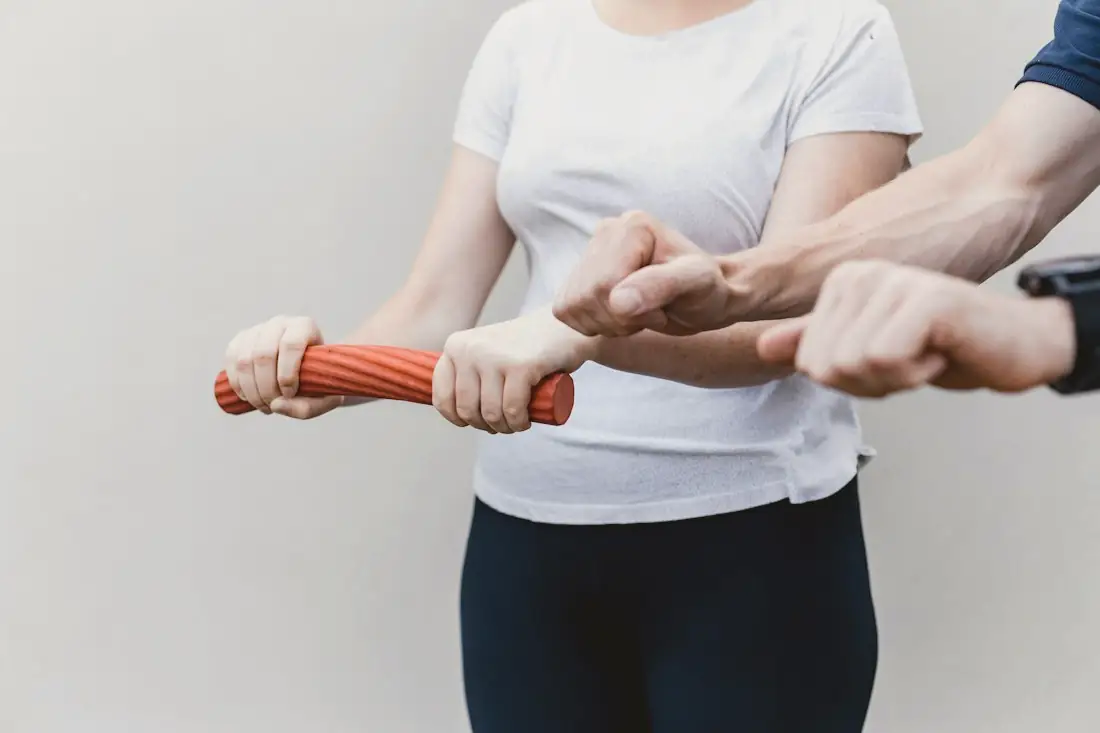
Golfer's elbow causes lasting pain on the inner side of the elbow
The main sign is pain on the inside of the elbow that does not go away and gets worse with everyday activities [1]. Throwing athletes may feel it most during the late cocking or early acceleration phases of a throw [1].
- Ongoing pain on the inner side of the elbow [1].
- Pain that flares with daily activities [1].
- In throwers, pain during the cocking and acceleration parts of the motion [1].
- Less ability to do the movement, and less tolerance for exercise, which is typical of tendon problems in general [2].
Diagnosis mostly rests on your symptoms [2]. In some cases, extra pain-provoking tests and imaging may be needed [2].
Repeated wrist and forearm motion wears down the flexor-pronator tendon
The flexor-pronator tendon is the tendon group that bends the wrist and turns the forearm so the palm faces down. Golfer's elbow develops when this tendon degenerates, meaning it slowly breaks down [1]. This happens with repetitive forced wrist extension and forearm supination during activities that involve wrist flexion and forearm pronation [1].
In plain terms, the wrist is forced backward and the forearm turns palm up while the muscles that bend the wrist and turn the palm down are working hard [1].
The change in the tendon can happen in stages. A staged process can lead to structural breakdown and irreparable fibrosis (scar-like thickening) or calcification (calcium buildup) [1]. Tendon problems in general also show disorganized collagen fibers, more tiny blood vessels, and more sensory nerve endings in the tendon [2].
Nonsurgical care forms the first stage of golfer's elbow treatment
| Stage | What it involves |
|---|---|
| Calming symptoms | Activity modification, NSAIDs (anti-inflammatory pain relievers), and corticosteroid injections [1] |
| After pain eases | Rehabilitation of the flexor-pronator muscle group and injury prevention [1] |
| Persistent symptoms | Open surgery, which is typically reserved for this group [1] |
Tendon care in general includes exercise and loading programs, therapeutic modalities, and surgery [2]. How well each of these works remains unclear [2].
Persistent golfer's elbow pain may lead a doctor to consider surgery
Call your doctor if inner elbow pain keeps going after supportive care such as activity changes [1]. Persistent symptoms are the situation in which surgery is typically considered [1].
A staged process of change in the tendon can result in structural breakdown and irreparable fibrosis or calcification [1].
Resistance exercise research offers clues but does not cover the inner elbow
Exercise therapy, with a focus on resistance exercise, is the main nonsurgical treatment for tendon problems in general [3]. A large review of 110 studies looked at five tendon locations: rotator cuff, Achilles, lateral elbow, patellar, and gluteal [3]. The inner elbow was not one of them [3].
Across those tendons, programs with added outside weight did better on average than body weight alone [3]. Programs done less often than daily also did better on average, possibly because the tendon had time to recover [3]. Results for total volume of exercise were not consistent [3].
These patterns come from other tendons, so they cannot be assumed to apply to golfer's elbow [3]. The reviewers also noted that exercise dose is poorly reported in this research [3].
Sources
- Medial epicondylitis: evaluation and management, The Journal of the American Academy of Orthopaedic Surgeons
- Tendinopathy, Nature reviews. Disease primers
- Effect of resistance exercise dose components for tendinopathy management: a systematic review with meta-analysis, British journal of sports medicine